Born from the Ocean of Milk
កំណើតពីសមុទ្រទឹកដោះ
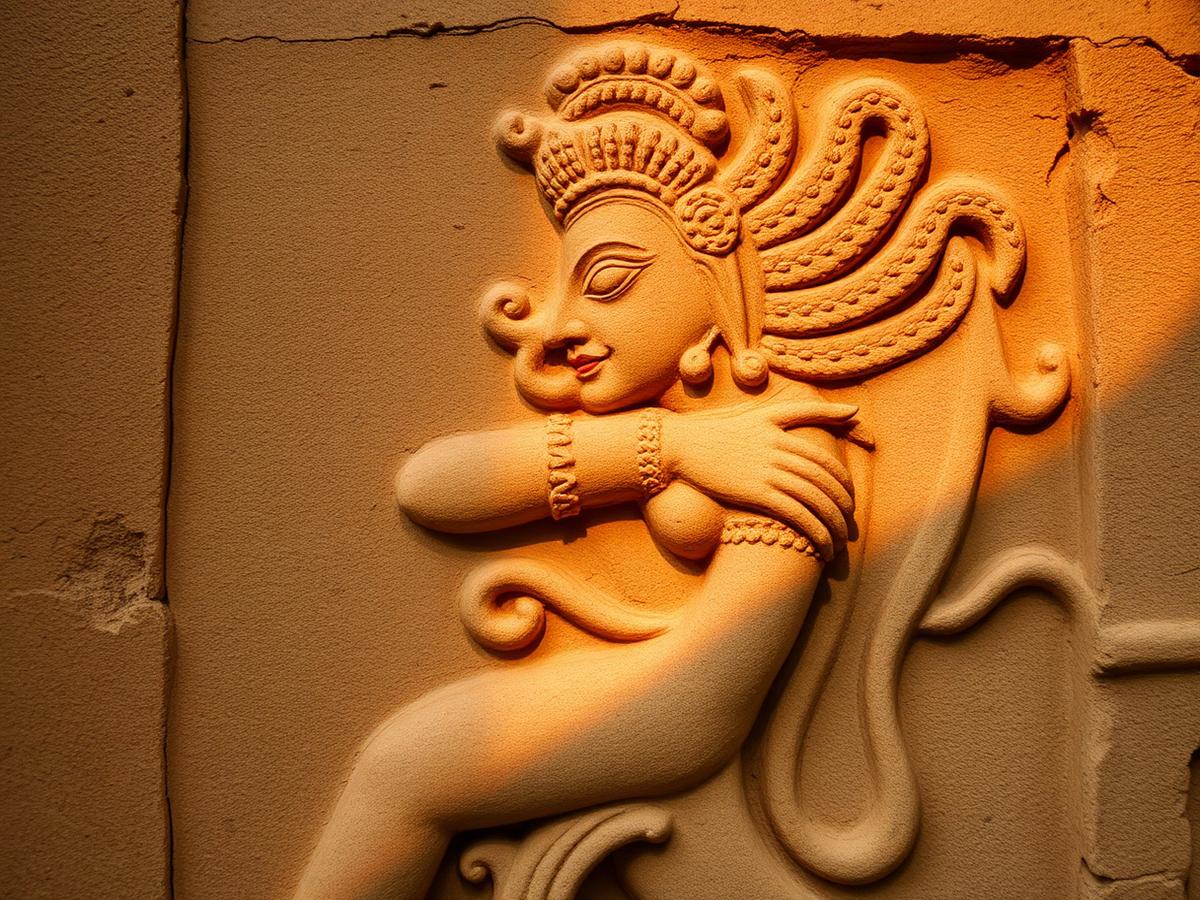
In the churning myth the apsaras rise from the agitated sea as the embodiment of grace itself. On temple walls they occupy the liminal zone between the terrestrial narrative registers and the divine towers above, functioning as a threshold population.
អប្សរាកើតចេញពីការកូរសមុទ្រទឹកដោះ ជានិមិត្តរូបនៃភាពទន់ភ្លន់។
Gesture and Revival
កាយវិការ និងការស្តារឡើងវិញ
Queen Sisowath Kossamak reconstructed the Royal Ballet's Apsara dance in the 1960s directly from these reliefs, reading hand positions (kbach) off sandstone. The 4,500 hand-and-body positions of classical Khmer dance remain anchored to this stone corpus.
របាំអប្សរាត្រូវបានស្តារឡើងវិញដោយព្រះមហាក្សត្រិយានី ស៊ីសុវត្ថិ កុសុមៈ ដោយផ្អែកលើចម្លាក់ទាំងនេះ។