Architectural Layout & Cosmology
ប្លង់ស្ថាបត្យកម្ម និងចក្រវាឡ
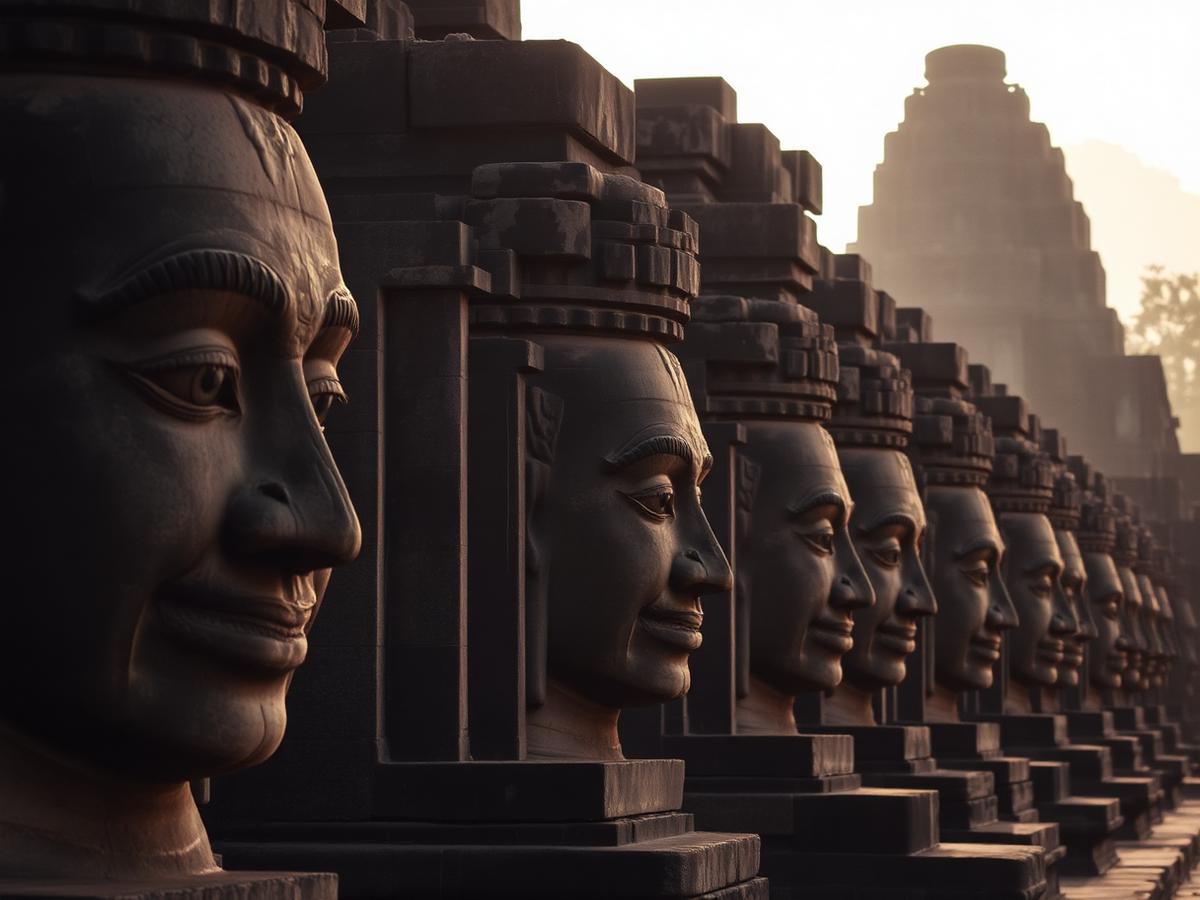
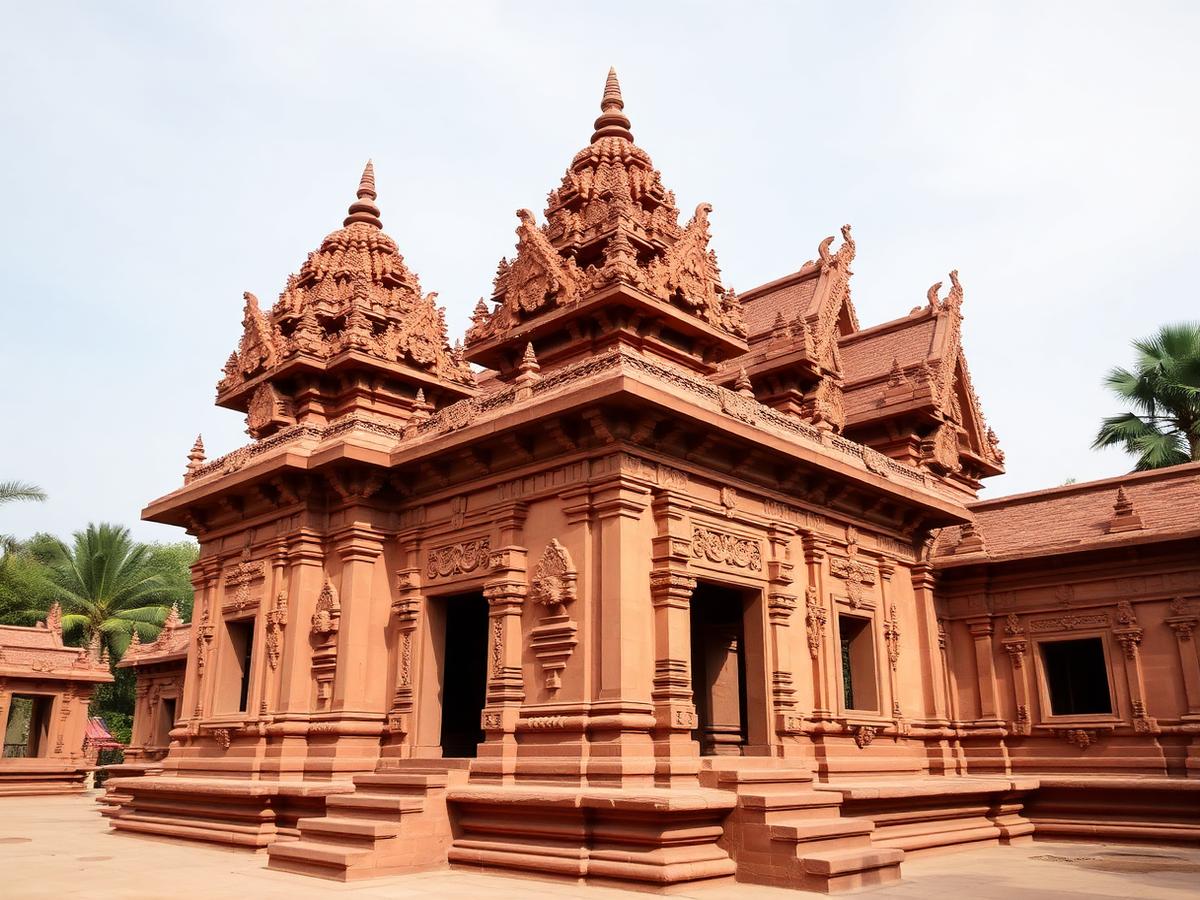
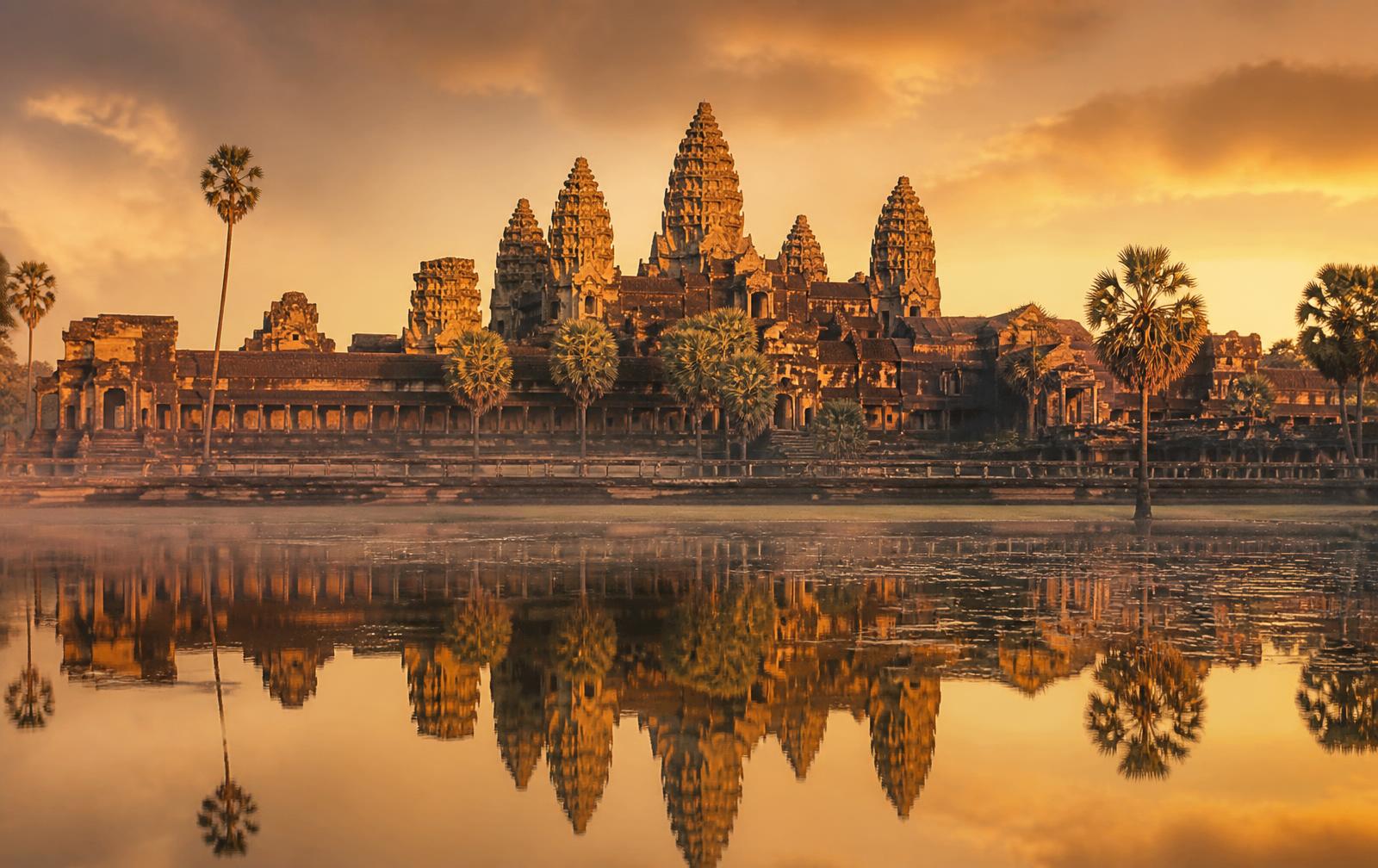
The temple is a cosmogram in sandstone. Five quincunx towers stand for the peaks of Mount Meru, the enclosing galleries for the mountain ranges at the edge of the world, and the 190-metre moat for the cosmic ocean. Unusually, the complex opens to the west — the direction of Vishnu and of death — supporting the reading of Angkor Wat as Suryavarman II's mortuary temple. The processional causeway compresses distance so that the towers appear to rise as the pilgrim advances, an optical liturgy rehearsed over some 350 metres.
ប្រាសាទនេះជាគំរូនៃភ្នំព្រះសុមេរុ ដែលមានប្រាសាទប្រាំ និងកសិណទឹកជុំវិញ តំណាងឲ្យសមុទ្រចក្រវាឡ។
The Bas-Relief Galleries
វិចិត្រសាលចម្លាក់
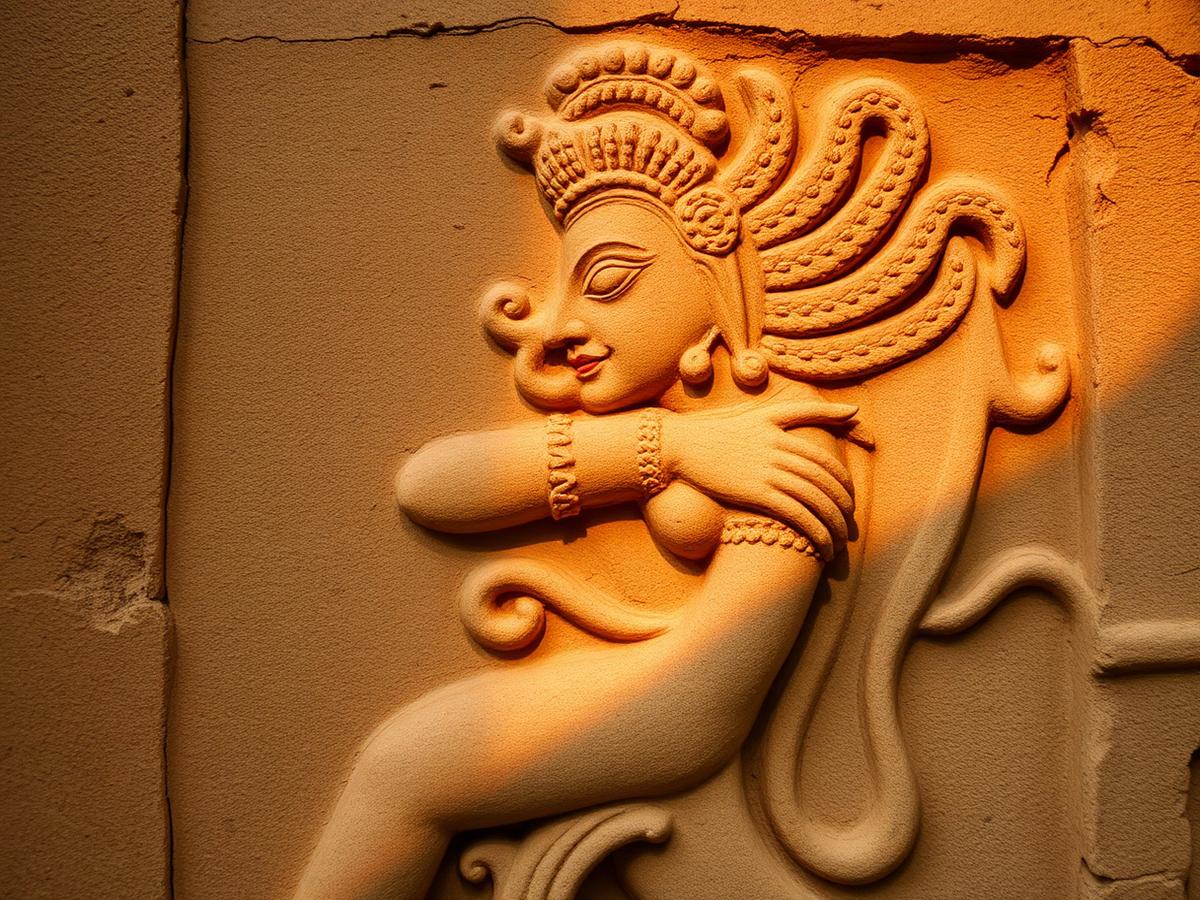
Nearly 600 metres of continuous narrative relief wrap the third enclosure. The southern gallery shows Suryavarman II holding court, the only near-contemporary portrait of the founder. The eastern gallery carries the Churning of the Ocean of Milk: 88 asuras and 92 devas hauling the naga Vasuki around Mount Mandara for a thousand years to win amrita, while apsaras spin into being from the froth. The western gallery renders the Battle of Kurukshetra from the Mahabharata in colliding registers of chariots and infantry.
ចម្លាក់ប្រវែងជិត ៦០០ ម៉ែត្រ រួមមានការកូរសមុទ្រទឹកដោះ និងសមរភូមិកុរុក្សេត្រ។
Preservation & Significance
ការអភិរក្ស និងសារៈសំខាន់
Angkor Wat was never abandoned: Theravada monks maintained it continuously after the Angkorian court moved south. Inscribed by UNESCO in 1992 and removed from the List of World Heritage in Danger in 2004, the site is now managed by the APSARA National Authority with anastylosis programmes on the western causeway and micro-drainage work against monsoon undercutting. The silhouette has appeared on every Cambodian flag since 1863 — the only building on any national flag in the world.
ត្រូវបានចុះបញ្ជីជាបេតិកភណ្ឌពិភពលោកក្នុងឆ្នាំ ១៩៩២ និងគ្រប់គ្រងដោយអាជ្ញាធរជាតិអប្សរា។